 Pin It
 Last winter, I was standing in my kitchen on a gray afternoon, staring at a pile of root vegetables that needed using up before they got sad and wrinkled. My neighbor had just dropped off a jar of homemade kimchi, and something clicked—what if I roasted all these winter vegetables quickly, then finished everything with that spicy, funky fermented kick? Twenty minutes later, I had the most comforting bowl of food that somehow felt both grounding and alive.
I made this for my partner on a night when we both needed something warm but not heavy, something that felt a little adventurous without demanding hours in the kitchen. The smell of ginger and garlic hitting hot oil, then those root vegetables caramelizing at the edges—it pulled us both to the kitchen counter without us planning it. By the time I added the kimchi and we sat down with bowls in our laps, the whole day felt lighter.
Ingredients
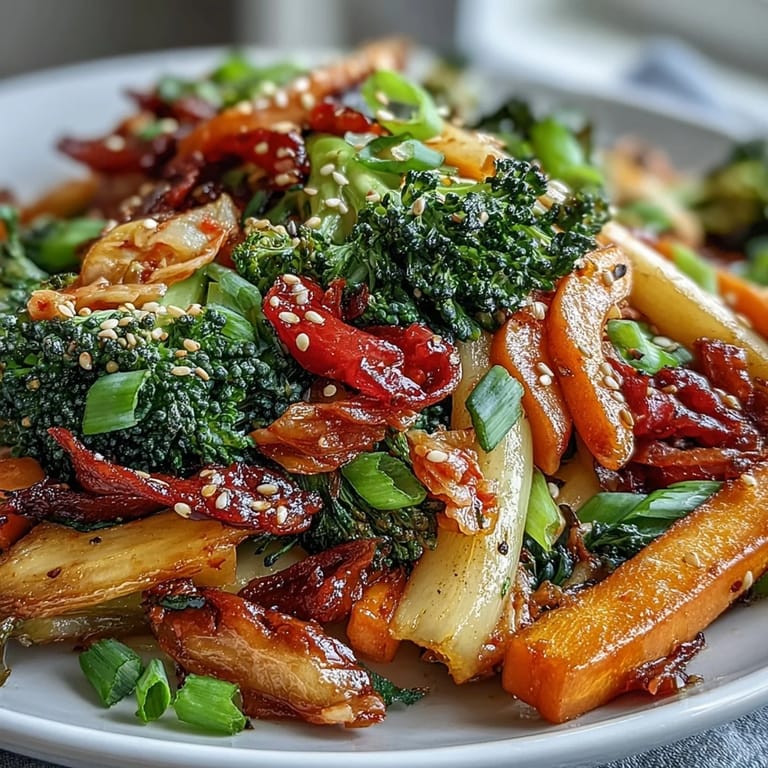
- Broccoli florets: The sturdy ones hold their texture beautifully even with high heat, and they soak up all that sesame-soy flavor like little flavor-catching trees.
- Carrots and parsnip: Cutting them on the bias isn't just for looks—it increases the surface area so they caramelize slightly and get sweeter as they cook.
- Sweet potato matchsticks: These add natural sweetness and a silky texture that balances the sharp kimchi at the end.
- Green cabbage: It wilts down dramatically but keeps some snap, and honestly, it's the budget-friendly backbone that makes this feel generous without the price tag.
- Red bell pepper: Added near the end so it stays bright and slightly crunchy, a little textural surprise in every bite.
- Fresh ginger: Grated ginger releases its oils faster than minced, and that aromatic heat is non-negotiable for this dish.
- Garlic: Those thirty seconds of sautéing before the vegetables go in transforms raw garlic heat into something mellow and welcoming.
- Toasted sesame oil: The toasted version has so much more depth—it's worth seeking out in the Asian aisle rather than settling for regular.
- Soy sauce or tamari: Tamari is your friend if soy is off-limits, and honestly, the flavor difference is so subtle most people won't notice.
- Rice vinegar: A touch of acidity brightens everything without making it taste sour or punchy.
- Maple syrup: Just enough to round out the flavors and make the sauce feel complete, not aggressively sweet.
- Kimchi: The star player—add it at the very end while the pan is off the heat so those beneficial probiotics stay alive and the spice stays sharp.
- Green onions and sesame seeds: These garnishes aren't just decoration; they add freshness and a toasted nuttiness that makes you want another bite.
Tired of Takeout? 🥡
Get 10 meals you can make faster than delivery arrives. Seriously.
One email. No spam. Unsubscribe anytime.
Instructions
- Get everything prepped and ready:
- Chop all your vegetables and mince your aromatics before the pan gets hot—once you start cooking, things move quickly and you won't have time to scramble. This is called mise en place, and it's the difference between feeling in control and feeling frantic.
- Heat the oil until it shimmers:
- Pour sesame oil into your largest wok or skillet and let it get hot over medium-high heat until you see it start to shimmer and smell toasty. You want the pan screaming hot so vegetables get that golden edge instead of just steaming.
- Wake up the ginger and garlic:
- Toss in your ginger and garlic and let them sizzle for about thirty seconds—you'll smell it immediately, and that's your signal they're perfect. Don't let them sit longer or they'll start to brown and taste bitter instead of fragrant.
- Add the hardy vegetables first:
- Carrots, parsnip, sweet potato, and broccoli all go in together because they need the most time to soften and caramelize. Stir constantly for four to five minutes, listening for that gentle sizzle that tells you things are actually cooking and not just warming through.
- Finish with the quicker vegetables:
- Cabbage and bell pepper join the party now because they cook fast and you want them to stay a little snappy and bright. Another three to four minutes, and you should be able to pierce the broccoli with a fork without much resistance.
- Mix and pour the sauce:
- While the vegetables finish, whisk together soy sauce, rice vinegar, and maple syrup in a small bowl so everything's combined and ready. Pour it over the vegetables and toss everything together—the pan should sizzle and smell incredible.
- Add the kimchi off the heat:
- Once you've poured in the sauce, remove the pan from the heat and gently fold in the chopped kimchi so those live probiotics don't get cooked away. This is where the dish goes from warm and savory to genuinely alive with fermented funk and spice.
- Plate and garnish:
- Divide everything into bowls, scatter green onions and sesame seeds over the top, and serve while everything's still steaming. If you're feeding more people, set it over rice or noodles so everyone can build their own bowl.
 Pin It
 There's a moment in cooking when you realize a dish has become something bigger than its ingredients—for me, that happened when a friend who usually orders takeout asked for the recipe and actually made it twice in one week. Food that nourishes you and makes you feel a little lighter somehow always tastes better.
Why Winter Vegetables Matter Here
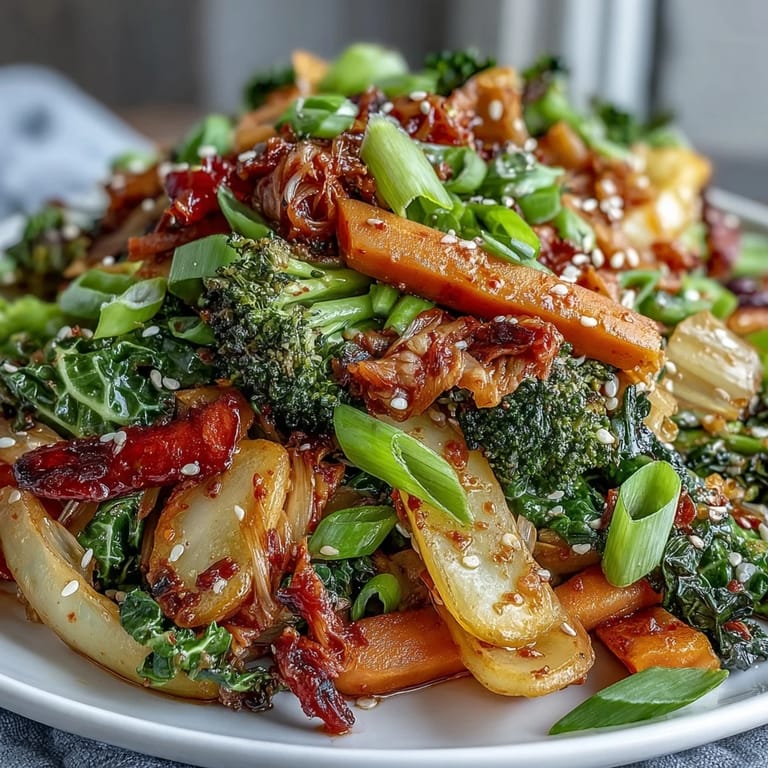
Winter vegetables aren't just what's available in January—they're actually denser and sweeter than their summer cousins because the cold triggers higher sugar content as plants protect themselves. Root vegetables like carrots and parsnips get a subtle caramelization on their edges when stir-fried, and that golden-brown bit is where the real flavor lives. Broccoli holds up to high heat without turning into mush, and sweet potato adds a gentle sweetness that plays beautifully against the sharp, funky kimchi.
The Fermentation Story
Kimchi isn't just a condiment or a finishing touch—it's a living food full of beneficial bacteria that your gut actually recognizes and celebrates. Adding it at the very end, off-heat, keeps those probiotics alive and kicking, which means you're not just eating something delicious, you're eating something that's actually working for your body. I started doing this after learning that high heat kills the good stuff, and suddenly I understood why fermented food has been treasured for thousands of years across so many cultures.
Making It Your Own
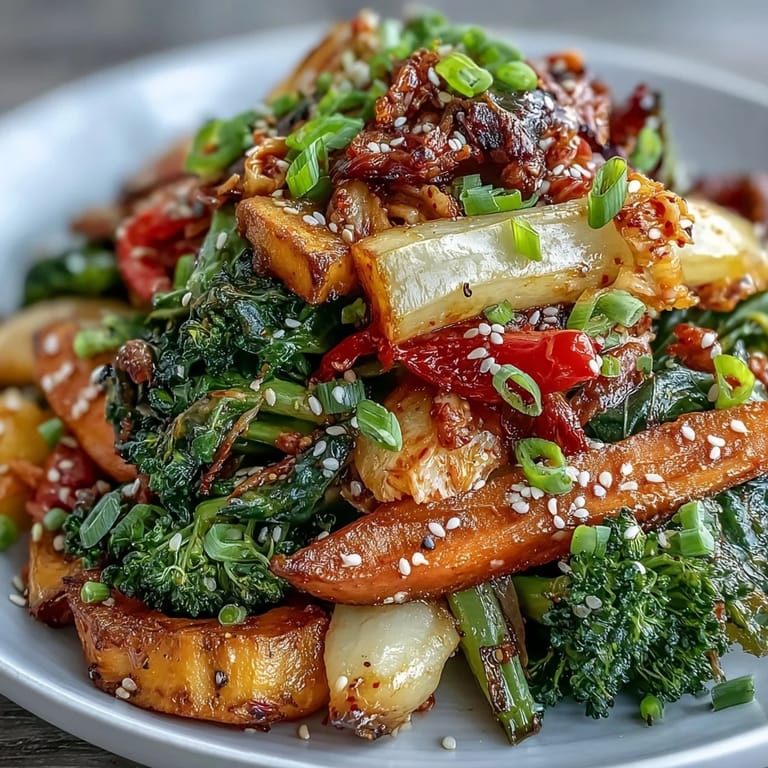
This recipe is genuinely forgiving and flexible, which means you can adapt it based on what's actually in your fridge or what you're craving that day. I've made it with kale torn into pieces, with turnip instead of parsnip, even with Brussels sprouts halved and left to get crispy at the edges. The basic method stays the same, but the dish always feels fresh because you're working with what feels right in that moment.
- Try adding a splash of fresh lime juice or a sprinkle of crushed cashews for extra texture and brightness.
- Serve over warm rice, quinoa, soba noodles, or even couscous depending on what you're hungry for.
- If you like heat, use more kimchi or add a pinch of red pepper flakes during the ginger and garlic sauté.
 Pin It
 This stir-fry has become my default meal when I want something that feels both nourishing and exciting, when I want food that tastes like care but doesn't demand hours. Make it tonight, or make it whenever you need reminding that the simplest ingredients can taste absolutely alive.
Recipe Questions & Answers
- → Can I make this dish gluten-free?
Yes, simply use tamari instead of soy sauce. Always check your kimchi label as some varieties contain wheat-based ingredients or fish sauce.
- → Why add kimchi at the end instead of cooking it?
Adding kimchi at the end preserves the beneficial probiotics and live cultures. High heat can destroy these gut-friendly bacteria, so tossing it in after removing the pan from heat keeps them intact.
- → What other winter vegetables work well in this stir-fry?
Turnips, rutabaga, kale, Brussels sprouts, or butternut squash all work beautifully. Just adjust cooking times accordingly—denser vegetables need more time while leafy greens cook quickly.
- → Can I make this spicy?
Absolutely. Add sliced fresh chili peppers with the aromatics, or increase the amount of kimchi for more heat. A drizzle of chili oil or sriracha also works well.
- → How long does this keep in the refrigerator?
The vegetables are best enjoyed immediately, but you can store leftovers in an airtight container for up to 3 days. The kimchi will continue to ferment, developing a stronger flavor over time.
- → Is there a protein option to add?
Crispy tofu, edamame, or tempeh would complement the flavors perfectly. If you're not vegetarian, sliced chicken, shrimp, or beef strips can be stir-fried with the vegetables.