 Pin It
 Monday mornings used to mean scrambling eggs in a hot pan while mentally running through the week ahead, until my neighbor mentioned she just bakes a giant sheet of them on Sunday and slices through it all week like a protein-packed cake. The idea stuck with me, and after tinkering with cottage cheese to keep things fluffy and throwing in whatever vegetables needed rescuing from my crisper drawer, this became the breakfast I actually look forward to making. No flipping, no timing each egg individually, just one beautiful pan that feeds my whole family with minimal fuss.
I made this for a brunch gathering last spring when I was too nervous to attempt anything fancy, and watching people go back for thirds while complimenting how light and fluffy it was made me realize simple ingredients and proper technique sometimes win over complexity. One friend asked for the recipe on the spot, and now she makes it every other Sunday for her kids' breakfasts—that kind of word-of-mouth validation means more to me than any compliment about a complicated dish ever could.
Ingredients
- Eggs: Ten large eggs provide the structure and the bulk of protein—make sure they're room temperature so they blend smoothly with the cottage cheese without creating lumps.
- Low-fat cottage cheese: This is the secret weapon that keeps the eggs tender and cloud-like instead of rubbery; don't skip it or use ricotta as a substitute, as the texture won't be quite the same.
- Milk: A quarter cup of either dairy or unsweetened plant-based milk helps the cottage cheese blend seamlessly and adds just enough liquid for even baking.
- Cherry tomatoes: Halved tomatoes release their juices slowly in the oven, creating little pockets of flavor throughout; they're sweeter and less watery than diced regular tomatoes.
- Baby spinach: Roughly chopped spinach wilts down significantly, so don't be shy about the full cup—it adds nutrition and a subtle earthiness without overpowering.
- Red bell pepper: Diced small, these add sweetness and crunch; the red variety tastes slightly sweeter than green or yellow, but use whatever you have on hand.
- Zucchini: Diced fine, zucchini contributes moisture and a delicate flavor that doesn't compete with the eggs; pat it dry if it seems particularly wet.
- Red onion: Finely chopped and used sparingly, this prevents sharpness while adding a gentle bite that rounds out the dish.
- Salt and pepper: Season boldly—the cottage cheese can mute flavors, so don't hold back.
- Dried oregano or Italian seasoning: Half a teaspoon is enough to avoid an herbaceous taste, but if you love herbs, add an extra pinch.
- Fresh chives or parsley: Added after baking, these brighten the finished dish and look intentional without requiring extra work.
Tired of Takeout? 🥡
Get 10 meals you can make faster than delivery arrives. Seriously.
One email. No spam. Unsubscribe anytime.
Instructions
- Set up your stage:
- Preheat your oven to 375°F and prepare a 13x9 inch baking sheet with nonstick spray or parchment paper—this takes two minutes and saves you from sticky frustration later. If you forget this step, the edges will stick stubbornly even after cooling.
- Build the base:
- Whisk eggs, cottage cheese, and milk together in a large bowl until the mixture looks smooth and slightly frothy—this usually takes about two minutes of vigorous whisking, and you'll feel the texture shift from lumpy to silky. Don't worry if a few tiny cottage cheese curds remain; they'll disappear during baking.
- Season generously:
- Stir in salt, pepper, and dried herbs, tasting as you go—the mixture should taste slightly more seasoned than you'd normally eat eggs, since the vegetables will dilute the flavors.
- Fold in the vegetables:
- Add all the chopped vegetables and mix gently to distribute them evenly, being careful not to crush the spinach or tomatoes. The key word here is gentle—rough stirring can break things apart unnecessarily.
- Pour and settle:
- Transfer the mixture to your prepared sheet pan and spread it to the edges, then tap the pan lightly on the counter a few times to help the eggs settle and fill any air pockets. This takes thirty seconds but makes a noticeable difference in even cooking.
- Bake with attention:
- Slide into the oven for 22 to 25 minutes, checking around the 20-minute mark by gently jiggling the pan—the center should still jiggle just slightly, and the edges should be light golden. If you overbake, the eggs become rubbery; if you underbake, the center won't set properly.
- Rest and serve:
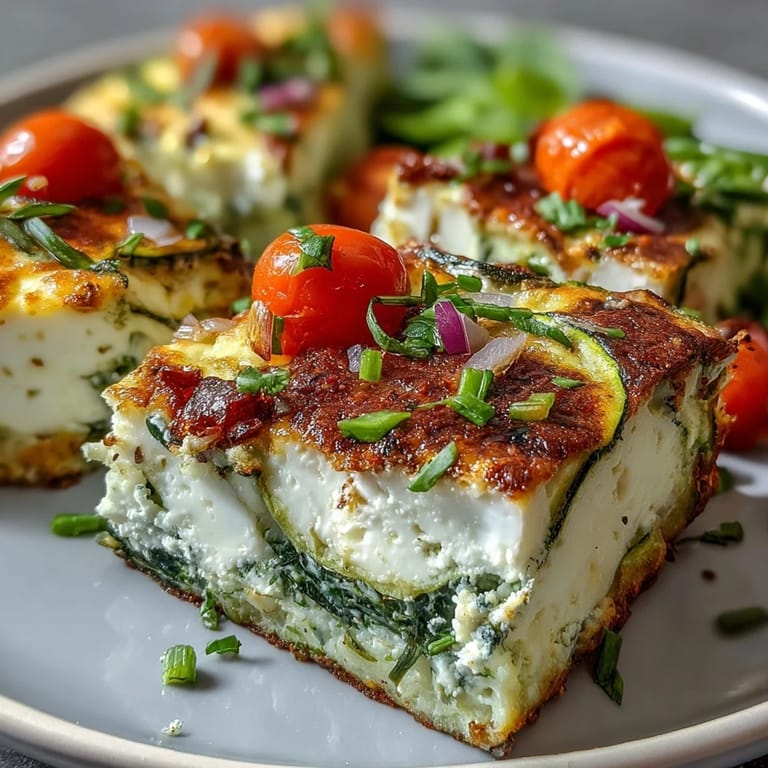
- Let the pan cool for five minutes before cutting—this allows the eggs to firm up just enough to slice cleanly without falling apart. Scatter fresh chives over the top and cut into six generous squares, then serve warm or at room temperature.
 Pin It
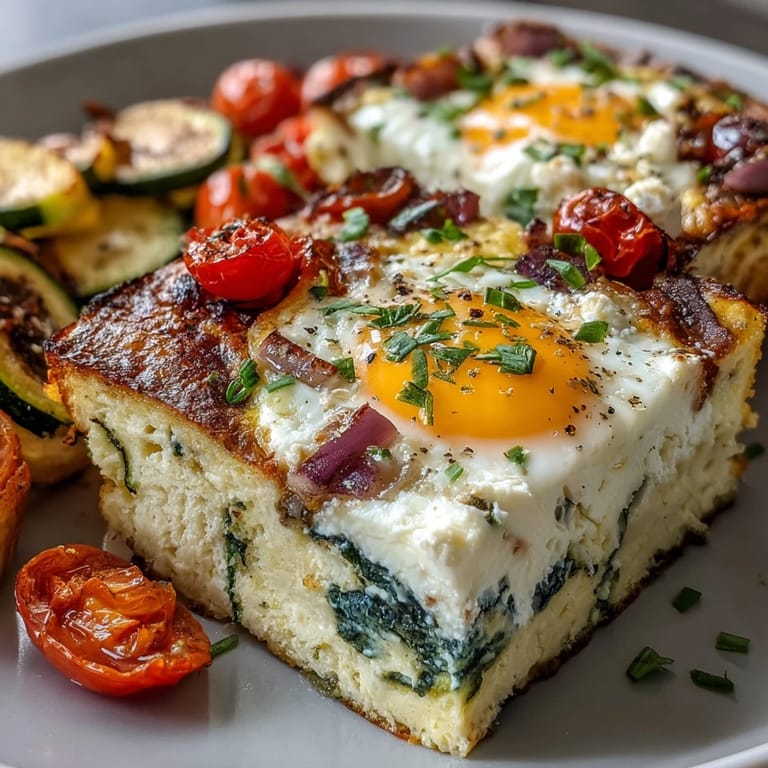
 There's a particular magic in cutting into this pan and seeing all those vegetables suspended in fluffy egg, knowing that breakfast for the next four days is already handled. My youngest asked for seconds at lunch one day because he'd reheated a cold slice from the fridge, and that's when I knew this recipe had genuinely become something we'd make forever.
Vegetable Flexibility and Swaps
The beauty of this recipe is that it begs for improvisation—whatever vegetables are looking slightly tired in your refrigerator become perfectly useful here. I've thrown in diced mushrooms, broccoli florets, asparagus tips, diced cucumber, roasted red peppers from a jar, and even leftover cooked potatoes with wonderful results. The general rule is to keep pieces small and consistent so they cook evenly, and if you're using particularly watery vegetables like summer squash or tomatoes, consider salting them lightly and letting them drain while you prep everything else.
Meal Prep Strategy and Storage
This dish transforms meal prep from a chore into something genuinely worthwhile—cut into six squares on Sunday evening, store them in an airtight container, and you have breakfasts that reheat in ninety seconds. I've eaten them cold straight from the fridge on rushed mornings, heated them gently in a 300°F oven to restore their fluffy texture, or microwaved them when I was truly desperate. They keep perfectly for four days and actually taste better on day two after the flavors have mingled overnight.
Elevating and Customizing Your Dish
Once you master the basic formula, small additions transform this from everyday breakfast into something special enough for guests. A handful of shredded cheddar or feta stirred into the egg mixture before baking adds depth, a pinch of chili flakes brings unexpected heat, or a drizzle of hot sauce on individual slices brings everything into focus. Some mornings I'll serve a slice alongside avocado toast or with a small side salad dressed simply with lemon and olive oil, turning a weekday breakfast into something that feels almost restaurant-worthy.
- Shredded cheese stirred in before baking creates golden pockets of richness throughout.
- A smashed avocado on the side transforms a quick breakfast into a complete meal in seconds.
- Fresh herbs like dill or cilantro scattered on top after baking add brightness that bottled seasonings can't quite capture.
 Pin It
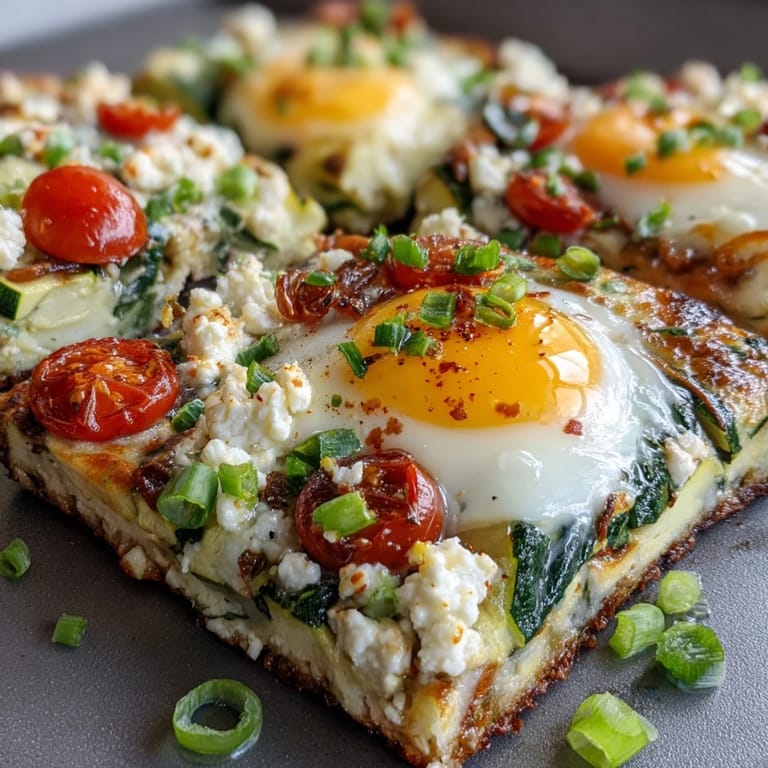
 This sheet pan breakfast has quietly become one of those recipes I make without thinking much about it anymore, which is exactly when I know something has earned its place in regular rotation. There's real comfort in reliable, nutritious food that tastes genuinely good and requires almost no stress to execute.
Recipe Questions & Answers
- → Can I make these sheet pan eggs ahead of time?
Yes, these eggs are perfect for meal prep. They keep well in an airtight container in the refrigerator for up to 4 days and reheat quickly in the microwave.
- → What vegetables work best in this dish?
Cherry tomatoes, spinach, bell pepper, zucchini, and red onion provide great flavor and texture. You can also try mushrooms, broccoli, or asparagus depending on what's in season.
- → Why add cottage cheese to eggs?
Cottage cheese adds moisture and creaminess while boosting protein content significantly. When whisked into the eggs, it creates a fluffy texture without being overly heavy.
- → How do I know when the eggs are done baking?
The eggs are ready when they're just set in the center and lightly golden around the edges, typically 22-25 minutes at 375°F. A slight jiggle in the center is normal.
- → Can I use different cheese instead of cottage cheese?
While cottage cheese provides the best texture and protein boost, you can substitute with ricotta or crumbled feta. Keep in mind the protein content and final texture may vary slightly.
- → What size baking sheet should I use?
A rimmed baking sheet approximately 13x9 inches (33x23 cm) works perfectly. The rimmed edges prevent any overflow while allowing the eggs to bake evenly.