 Pin It
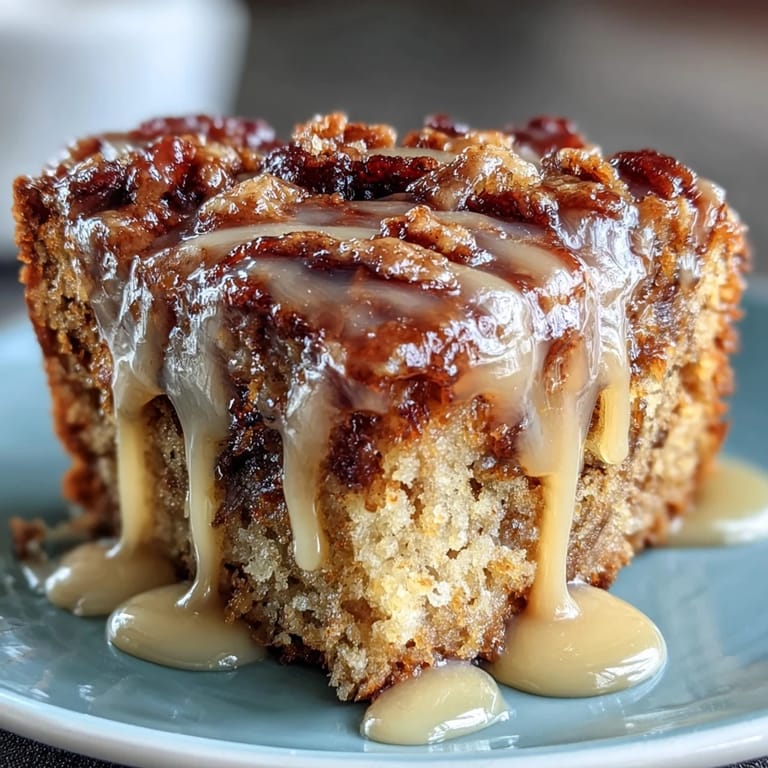
 My neighbor brought me a jar of dandelion honey last spring, bright golden and floral, and I spent weeks trying to figure out what to do with it besides tea. Then one gray afternoon, while reorganizing my spice drawer, I found myself daydreaming about something tender and citrus-kissed, something that would let that honey shine without overwhelming it. This cake emerged from that wandering thought—moist, delicate, with the kind of subtle floral note that makes people pause mid-bite and ask what makes it taste like springtime in a slice.
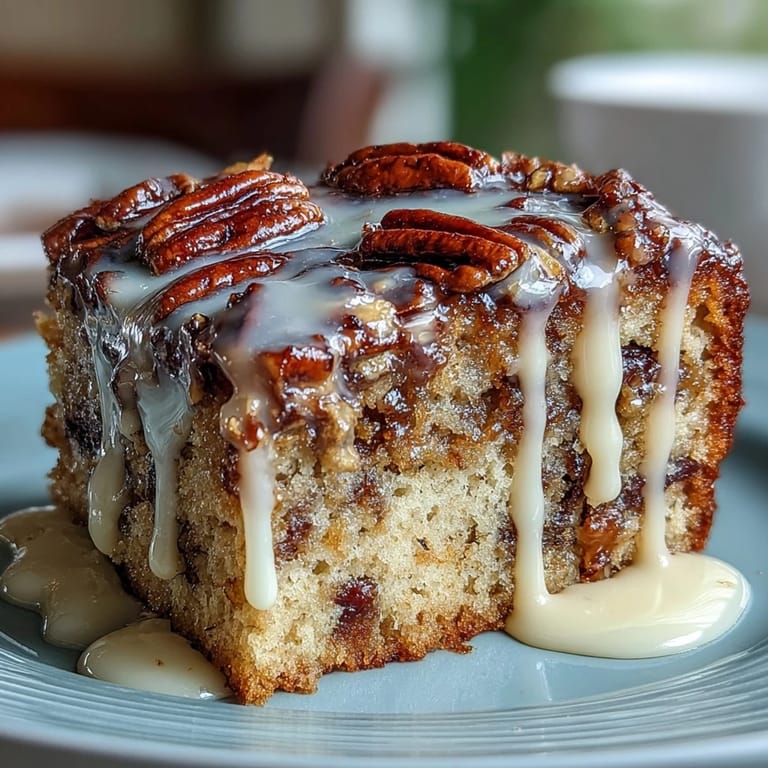
I baked this for my book club on a rainy May evening, and one friend literally closed her eyes after the first bite—she said it tasted like someone had captured the smell of a meadow and baked it into cake form. That moment, watching someone genuinely transported by something I'd made, reminded me why I love fussing over small details in the kitchen. The lemon glaze caught the light beautifully too, making the whole cake look almost jeweled under the dining room lamp.
Ingredients
- All-purpose flour (2 cups/250 g): The foundation that keeps this cake tender without being dense; make sure it's measured by weight or spooned and leveled, not scooped straight from the bag.
- Baking powder and baking soda (1.5 tsp and 0.5 tsp): This combination gives the cake a gentle rise and keeps it from feeling heavy, so don't skip or swap them out arbitrarily.
- Fine sea salt (0.5 tsp): A small amount that wakes up the honey and lemon without tasting salty—it's the whisper that matters.
- Unsalted butter (0.5 cup/115 g), room temperature: Cold butter won't cream properly, so let it sit on the counter for at least 30 minutes beforehand.
- Dandelion honey (0.5 cup/120 ml): This is the soul of the cake; if you can't find it, regular honey works, but the dandelion variety adds an almost herbal sweetness that feels intentional.
- Granulated sugar (0.5 cup/100 g): Works alongside the honey to create the right crumb structure and sweetness balance.
- Eggs (3 large), room temperature: Room temperature eggs incorporate more smoothly and create a better emulsion with the butter and honey.
- Pure vanilla extract (1 tsp): Don't use imitation; the real thing adds a subtle depth that complements the floral notes.
- Whole milk (0.5 cup/120 ml), room temperature: The temperature matters because cold milk can seize the batter, so plan ahead.
- Lemon zest (2 tbsp from about 2 lemons): Fresh and fragrant, this brightens everything without making the cake taste sour or harsh.
- Freshly squeezed lemon juice (2 tbsp): Bottled juice tastes tinny compared to fresh, and you'll taste the difference in every bite.
- Powdered sugar (1 cup/120 g), sifted: Sifting prevents lumps in the glaze, making it smooth and glossy instead of grainy.
- Dandelion honey for glaze (1 tbsp): A touch more honey in the glaze bridges the flavors between cake and topping, making them feel connected.
Tired of Takeout? 🥡
Get 10 meals you can make faster than delivery arrives. Seriously.
One email. No spam. Unsubscribe anytime.
Instructions
- Set the stage:
- Preheat your oven to 350°F (175°C) and prepare a 9-inch round cake pan—grease it generously and dust with flour, or line it with parchment paper for zero stress when removing the cooled cake. Getting this done first means you can move through the rest without rushing.
- Mix the dry ingredients:
- Whisk together the flour, baking powder, baking soda, and salt in a medium bowl and set aside; this ensures the leavening agents are evenly distributed throughout the batter. It only takes a minute and prevents overmixing later.
- Cream the butter and sweeteners:
- Beat the room-temperature butter, dandelion honey, and sugar together in a large bowl for about 3 minutes until the mixture is pale, fluffy, and noticeably lighter in color. You're incorporating air here, which creates a tender crumb, so don't rush this step or use cold butter.
- Add the eggs and flavorings:
- Beat in the eggs one at a time, letting each one fully incorporate before adding the next—this takes about a minute per egg and prevents a curdled-looking batter. Stir in the vanilla extract, lemon zest, and lemon juice, and you'll notice the mixture become gorgeously fragrant.
- Build the batter carefully:
- Add the flour mixture and milk in three alternating parts, beginning and ending with the flour—this means flour, then milk, then flour, then milk, then flour—mixing only until just combined after each addition. Overmixing develops gluten and toughens the cake, so stop as soon as you don't see dry streaks.
- Transfer and bake:
- Pour the batter into your prepared pan, smooth the top gently with a spatula, and slide it into the oven for 35 to 40 minutes. You'll know it's done when a toothpick poked into the center comes out clean or with just a crumb or two.
- Cool with patience:
- Let the cake rest in the pan for 10 minutes—this allows it to set enough to turn out cleanly—then turn it onto a wire rack to cool completely. This part is crucial; a warm cake will absorb the glaze unevenly and crack.
- Make the glaze:
- Whisk together the sifted powdered sugar, lemon juice (add it gradually, a tablespoon at a time, to control the consistency), and dandelion honey until smooth and pourable. You want it thick enough to cling to the cake but thin enough to drip slightly—like melted white chocolate.
- Finish the cake:
- Drizzle the glaze generously over the cooled cake and let it set for 10 to 15 minutes before slicing. The glaze will firm up just enough to support the first slice without running all over the plate.
 Pin It
 What strikes me most about this cake is how it carries a conversation—it's delicate enough that people slow down to taste it, floral enough to spark questions, and dressed up enough that it feels like you've made an occasion of an ordinary afternoon. That's the small magic of a thoughtfully made dessert.
The Dandelion Honey Question
Dandelion honey is becoming easier to find at farmers markets and specialty grocers, and it's worth seeking out if you can. The flavor sits between wildflower honey and something almost herbal—it adds a sophisticated undertone without tasting medicinal or unusual. If you genuinely can't find it, regular honey works perfectly fine, but you'll lose that subtle floral character that makes this cake feel special rather than standard.
Scaling and Serving
This recipe makes one 9-inch cake, which yields about 8 generous slices. If you want to bake two layers for a taller cake, you can, but add 5 to 10 minutes to the baking time and check often. It pairs beautifully with herbal tea—chamomile or lemon verbena feel especially natural—or a light, floral white wine if you're serving it after dinner.
Storage and Make-Ahead Ideas
The unglazed cake actually keeps beautifully for up to 3 days in an airtight container at room temperature, so you can bake it a day ahead and glaze it just before serving if that makes your day easier. The glazed cake is best eaten within a day, though it won't spoil—the glaze just softens slightly as it sits.
- You can make the batter and bake the cake up to 24 hours in advance, letting you glaze and serve with minimal fuss.
- If you want to add dandelion petals for extra flavor, use only unsprayed petals and chop them finely before folding them into the finished batter.
- The glaze can be made while the cake cools, so you're never waiting around with a finished cake and no frosting.
 Pin It
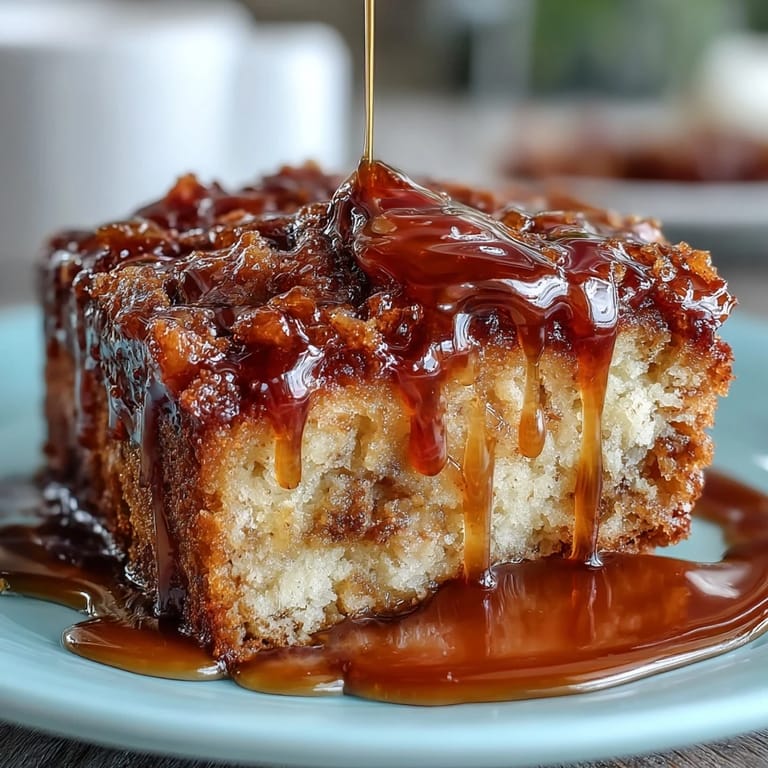
 This cake is proof that the simplest ingredients, treated with care and a little thoughtfulness, become something memorable. Bake it for someone you want to make smile.
Recipe Questions & Answers
- → What gives the cake its floral flavor?
Floral notes come from the dandelion honey, which imparts a unique, fragrant sweetness to the cake.
- → Can I use regular honey instead of dandelion honey?
Yes, regular honey can be used as a substitute, though it may alter the cake's distinctive floral character.
- → How is the lemon glaze made smooth?
The glaze combines powdered sugar, freshly squeezed lemon juice, and dandelion honey whisked together until smooth and pourable.
- → What is the ideal baking temperature and time?
Bake at 350°F (175°C) for 35–40 minutes or until a toothpick inserted in the center comes out clean.
- → Can I enhance the dandelion flavor in the cake?
Adding 2 tablespoons of finely chopped unsprayed dandelion petals to the batter will intensify the dandelion aroma and taste.